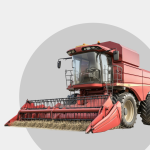





- Nearly PLN 340 million in fines have been imposed on eight companies and two individuals for collusion in the sale of agricultural machinery.
- The entrepreneurs divided the market and set prices. This is not allowed.
- For over 11 years, farmers were unable to purchase New Holland, Case, and Steyr machinery from selected dealers at competitive prices.
According to the agreement, sales outside a dealer’s designated area without consultation could (and did) result in unpleasant consequences.* In one of its e-mails, CNH Industrial Polska (CNH) – the manufacturer and distributor of New Holland, Case, and Steyr agricultural machinery – threatened dealers not to sell machinery to customers outside their assigned area. This was the essence of an agreement restricting competition – market division scheme reinforced by arrangements regarding the prices offered.
The President of UOKiK, Tomasz Chróstny, issued a decision imposing fines of almost PLN 340 million on CNH Industrial Polska and seven dealers: Przedsiębiorstwo Handlowo-Usługowe Perkoz, Przedsiębiorstwo Handlowo-Produkcyjne Rolserwis, Raitech, Pol-Agra J. Korneluk, T. Rzeszowski, Adler Agro, Kisiel Agrotech, and Kisiel. Managers at CNH and Perkoz who were directly responsible for the collusion were also penalised. CNH, Kisiel Agrotech, and Kisiel participated in these arrangements with regard to the Case and Steyr brands. CNH, Perkoz, Rolserwis, Raitech, Pol-Agra, and Adler Agro restricted competition in the sale of New Holland machinery.
– Each of us has the right to compare offers from multiple sellers and choose the most advantageous one. Farmers who wanted to buy New Holland, Case, or Steyr machinery were deprived of this opportunity by an illegal agreement between the entrepreneurs, involving market division scheme and price fixing. This is all the more unacceptable when we consider the financial burden that the purchase of a new tractor or combine harvester places on farmers – says Tomasz Chróstny, President of UOKiK.
How the collusion worked, or how the market was undermined
A farmer intending to purchase agricultural machinery from one of the following brands – New Holland, Case, or Steyr – would normally seek offers from several dealers in order to compare them and choose the best one. When he contacted a dealer, he was first asked about his place of residence or the location of his farm. If his location was outside the area covered by the dealer he contacted, he was either referred to a local seller or offered a higher price than at the nearest dealer.
This was a concerted action by CNH and its dealers, for which UOKiK obtained substantial evidence during searches of the companies’ premises, including the e-mail correspondence quoted below.
Dealers were assigned exclusive territories in which they sold agricultural machinery. The prohibited agreement involved limiting the possibility of passive sales – that is, situations where a farmer located outside a dealer’s exclusive territory approached the dealer directly. This is illustrated in an e-mail obtained during the searches and used as evidence in the case: As for territorialism, I agree. Every customer should be referred to their local dealer.
The price agreements that reinforced the market division scheme consisted of presenting more expensive offers to farmers outside a dealer’s exclusive territory. An example is another e-mail obtained by UOKiK during the proceedings: In the coming days, our customer will contact you regarding price verification […]. We are discussing the purchase of a combine harvester with him […]. Please quote a price above £700,000.00 net. Thank you in advance for your help.
Leader of the collusion
CNH Industrial Polska played a leading role in the agreement. It acted as an intermediary in the transfer of information concerning, among others, the details of customers who had requested a quote from a dealer other than the one designated for their location. It also instructed dealers not to submit offers to these customers or to terminate negotiations with them. In one of its e-mails to a distributor, the company wrote: Please check whether any of your sales representatives have signed a contract with the customer listed below. If so, please withdraw from the contract.
In addition, CNH supported transactions – including through discounts – only for those dealers who sold machines to farmers within their assigned areas. Customers from outside these areas received offers at correspondingly higher prices. In its e-mail correspondence, CNH noted that when a customer approached a neighbouring dealer, they would receive an offer with a higher margin so as not to disrupt the market.
Dealers actively involved in collusion
The evidence shows that the dealers themselves were also actively involved in the collusion. They contacted both CNH and each other to share information about customers outside their territory who were seeking attractive offers. They passed on requests to farmers in their area not to submit or to withdraw offers. For example, one e-mail states: Last week, a customer from your area visited our office and asked about an orchard tractor. I first asked him where he was from, and after learning that he was from your area, I referred him to you.
Dealers also complained to CNH if one of them did not want to comply with the terms of the collusion. Such a seller was reprimanded by the manufacturer, for example, in an e-mail forming part of the evidence: Please do not offer combine harvesters in the Raitech area, as this will cause serious problems.
– The foundation of a free market economy is both the right to choose and fair competition between independent businesses for customers, based on the quality and price of the products offered. Dealers are independent entrepreneurs, so they are obliged to set prices for goods individually and comply with competition law, including competing fairly with each other for customers. Market division scheme and price fixing for over 11 years eliminated competition in the distribution of the New Holland, Case, and Steyr brands. Farmers suffered as a result of this market collusion, as they were unable to purchase machinery at more favourable prices – says Tomasz Chróstny, President of UOKiK.
Fines
The total fines amounted to PLN 339,080,125:
- CNH Industrial Polska – PLN 241,599,000
- Przedsiębiorstwo Handlowo-Usługowe Perkoz – PLN 23,778,000
- Przedsiębiorstwo Handlowo-Produkcyjne Rolserwis – PLN 13,356,000
- Raitech – PLN 24,391,000
- Pol-Agra J. Korneluk, T. Rzeszowski – PLN 8,249,000
- Adler Agro – PLN 15,335,000
- Kisiel Agrotech – PLN 6,778,000
- Kisiel – PLN 5,341,000
- Piotr Wiak (manager at CNH during the collusion) – PLN 103,125
- Jacek Grajewski (manager at Perkoz during the collusion) – PLN 150,000
The decision is not final and may be appealed to the court.
– This is our next decision concerning the sale of agricultural machinery, in which we stand on the side of farmers. The previous ruling concerned equipment manufactured by Claas. Proceedings concerning Valtra, Fendt, and Massey Ferguson machines are still pending – says Tomasz Chróstny, the President of UOKiK.
You can seek redress
Anyone who has suffered a loss as a result of a breach of competition law may file a civil lawsuit against any of the entities that have broken the law. Claims for compensation may be pursued under the Act on Private Enforcement, which came into force in 2017. The President of UOKiK has prepared and published a special study in which he provides a closer look at the regulations on these issues.
The leniency programme
The maximum fines for participation in an anti-competitive agreement is 10 per cent of turnover for business entity and PLN 2 million for managers. Severe penalties for participation in collusion can be avoided through the leniency scheme. It offers businesses involved in an illegal agreement and managers responsible for entering into a collusion arrangement an opportunity to reduce a sanction or, in some cases, avoid it altogether. It is intended for those who agree to cooperate with the President of UOKiK as a “crown witness” and provide evidence or information regarding the existence of a prohibited agreement. We encourage those interested in the leniency scheme to contact UOKiK at a dedicated phone number: 22 55 60 555. UOKiK staff will answer any questions about the leniency programme, including anonymous ones.
A platform for whistleblowers
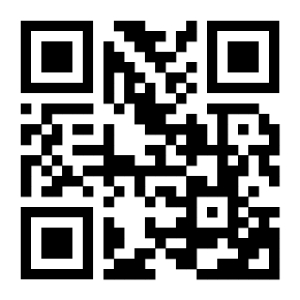
We also remind you that we have a platform for obtaining information from anonymous whistleblowers. Do you wish to inform UOKiK about competition-restricting practices? Visit https://uokik.whiblo.pl/ or scan the QR code below and use the simple form. The system we use guarantees full anonymity, including from UOKiK.
*The announcement uses e-mail correspondence between CNH and dealers obtained during searches of the companies’ premises. The original spelling has been retained.
Files to download
Information for the media
 | +48 603 124 154 |
 | biuroprasowe@uokik.gov.pl |
 | Pl. Powstańców Warszawy 1 00-950 Warszawa |
Follow us
   @UOKiKgovPL @UOKiKgovPL |
See also